In Step with Horses:
How a Kentucky Forest is Reaching Nova Scotia Woodlot Owners
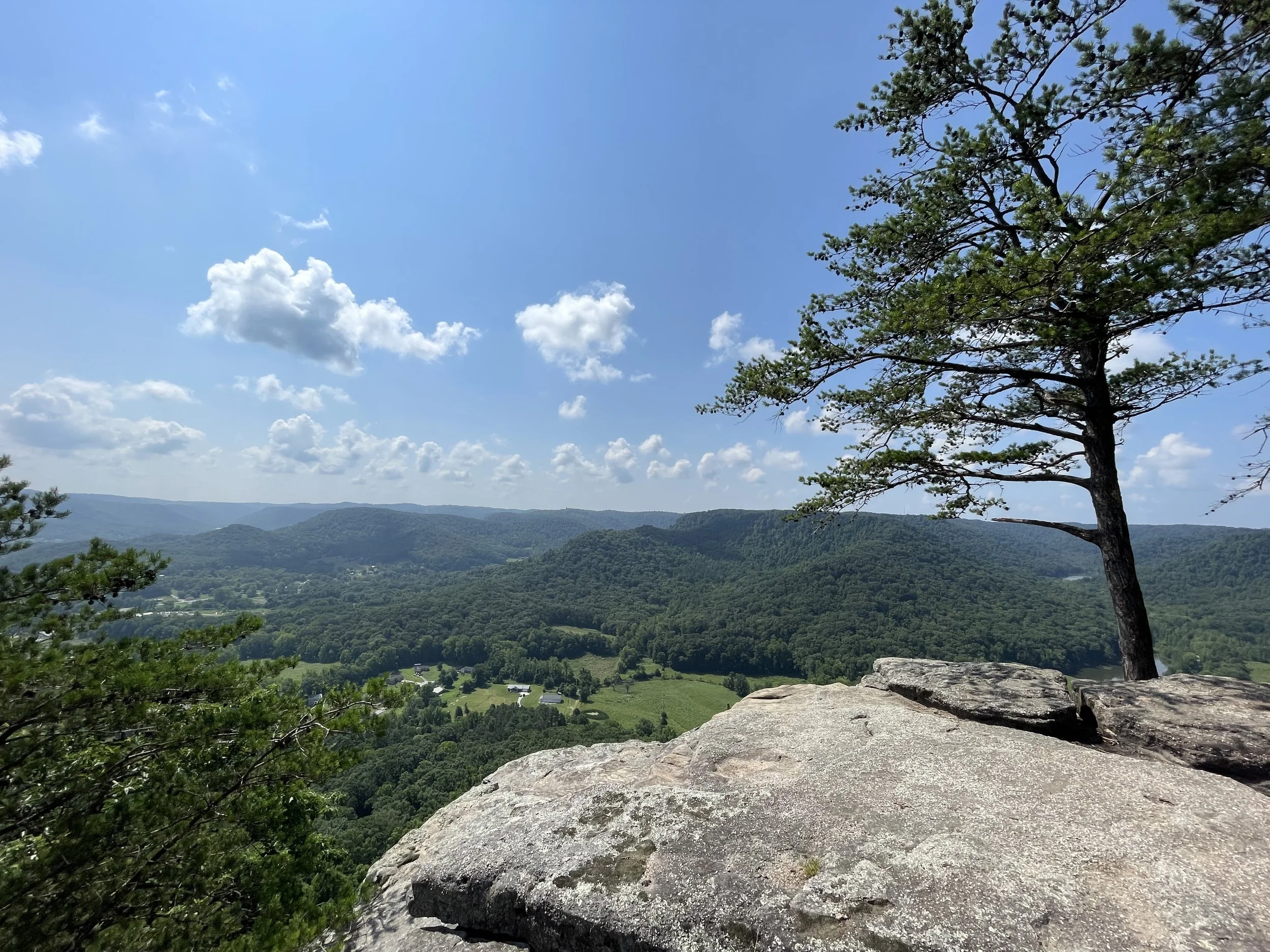
The road back from Kentucky offered plenty of time to reflect, but in truth the impressions of our visit to Berea College and the nine thousand acres of surrounding woodlands had already settled in deeply. What began as a fact-finding trip in early summer 2025 quickly became something more meaningful—a reminder that good forestry, like good community, is built on shared values, careful listening, and a willingness to carry old knowledge forward into new contexts. Travelling on behalf of the Federation, I joined veteran Ontario horse logger Art Shannon with a clear purpose: to see firsthand how horse logging is being practiced, taught, and refined in one of the oldest continuously managed forests in the United States, and to consider how those approaches might translate back home in Nova Scotia.
.
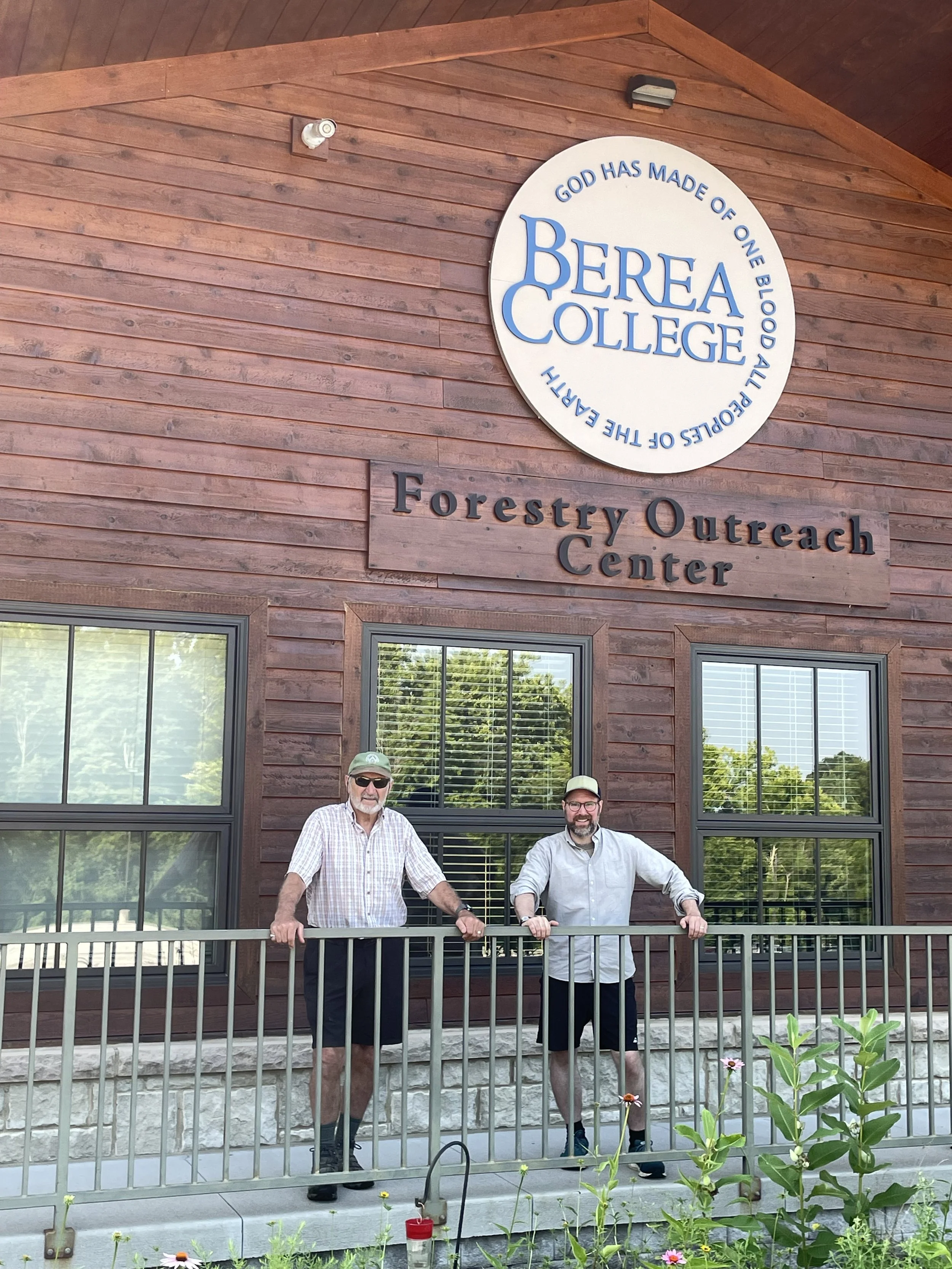
Art and Blair at Berea’s Forest Outreach Centre
At the heart of Berea’s forest management system is a unique collaboration between Forester Clint Patterson, Master Logger Sam Tackett, and Forest Technician John Hite. Each brought a distinct expertise, yet their work blended seamlessly into a unified approach that treats logging not as nostalgia, but as a practical, adaptable system for modern forest management. On our first day, Clint takes us to a local diner before ferrying us up to meet the team at the large custom-built stables overlooking the Kentucky hills. Sam doesn’t mince words, but he shows absolute patience for all my questions. When I confide early on that we have too much to cover in such a short trip, he looks over and grins, “takes a lifetime to learn a lifetime” and moves us into the barn. Most of the time is spent reviewing various types of equipment, horse breeds, and the unique forest landscape, interspersed with head-shaking stories about their shared challenges and endeavours in making horses a key feature of forest and watershed management. Their approach makes clear that timber production and watershed stewardship are not competing objectives, but part of the same system, where selective, low-impact harvesting helps sustain water quality while also supporting long-term forest productivity and reservoir health.
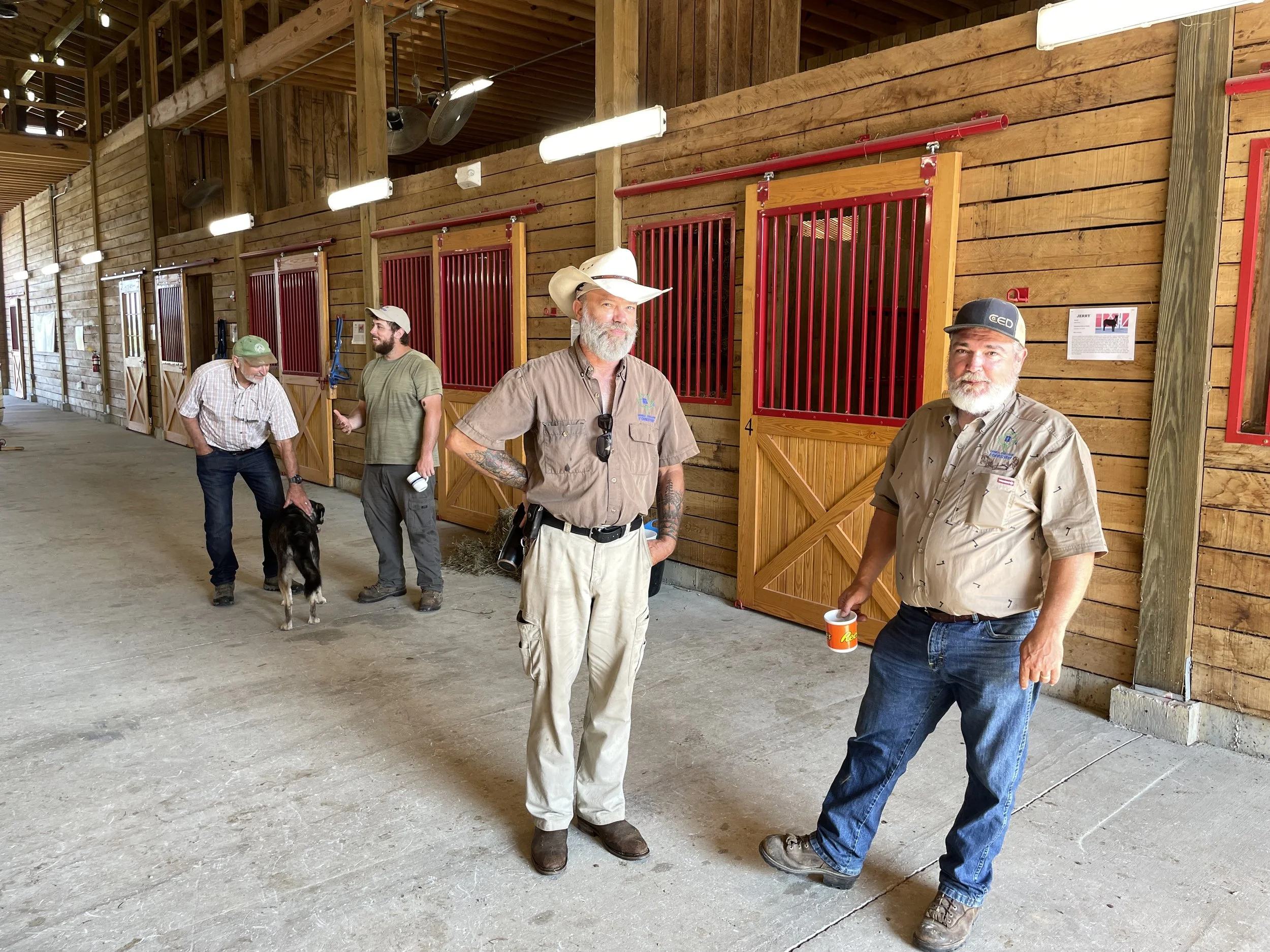
From L-R: Art Shannon, John Hite, Clint Patterson, and Sam Tackett.
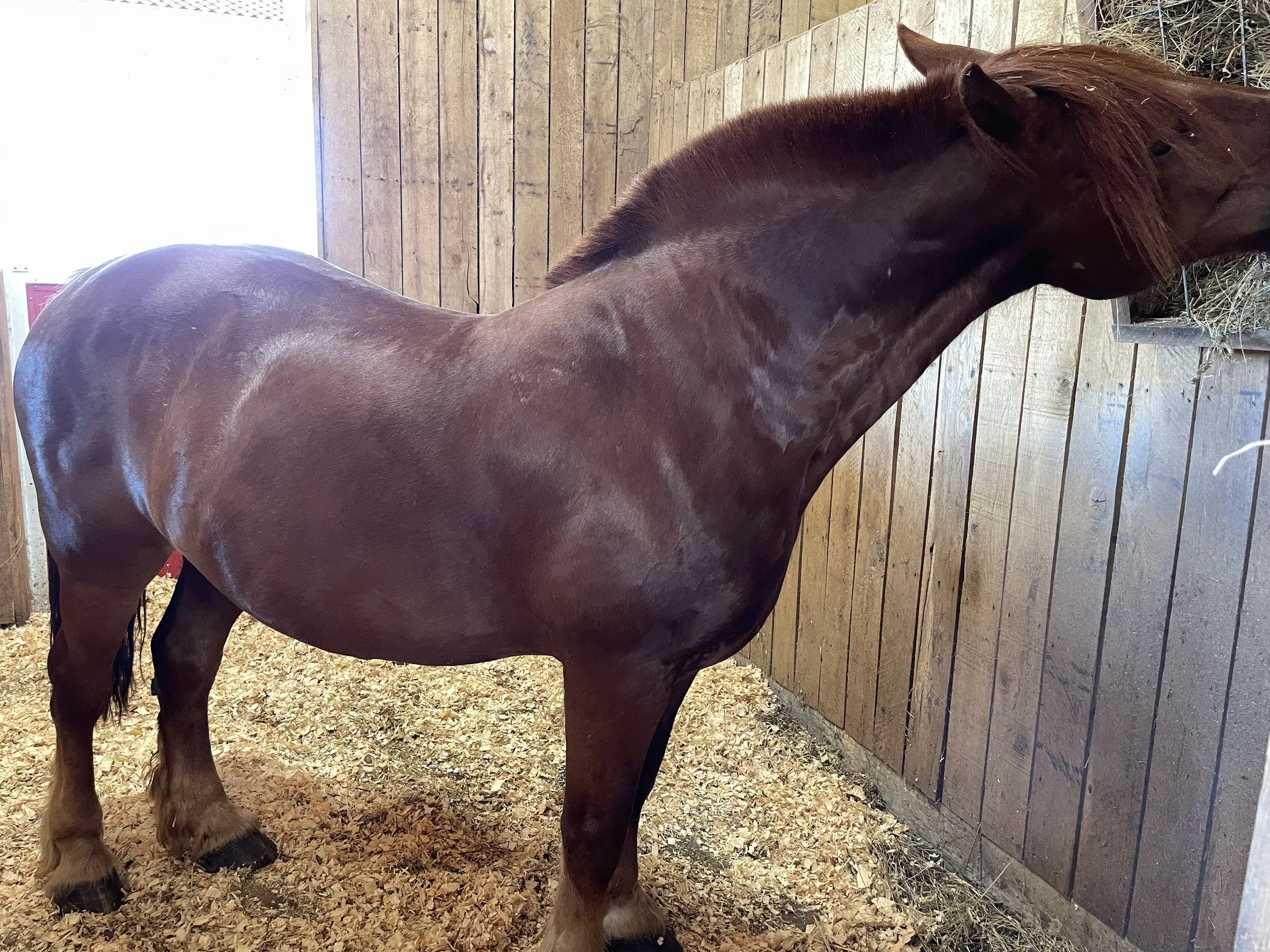
Berea’s style of logging owes much to the Suffolk Punch, known for their compact build, strength, and steady temperament. “Horses bring people in, and you can tell them apart,” Sam notes. Suffolks proved exceptionally well-suited to the hilly terrain and mature hardwood forests of the Berea watershed.
But on our arrival, the question of horse breeds quickly became something more immediate than a matter of forestry tradition. Kentucky was in the grip of a punishing summer heat dome. The morning air was already heavy, the forest holding the heat beneath its canopy, and by afternoon the combination of temperatures in the mid-30s Celsius and oppressive humidity made the woods feel less like a workplace than a furnace. Recognizing the strain that such conditions could place on working horses, the demonstration was carefully planned around their welfare: the groups started early, when temperatures were more manageable, and finished early rather than working into the hottest part of the day. The horses were closely monitored throughout the early morning, with the work paced to their condition and no attempt made to push them beyond what the heat allowed. The experience reinforced an important lesson: working with horses in the forest demands not only an understanding of their strength and capability, but also a willingness to adapt the work accordingly. Water, shade, breathing, and the horses’ demeanor all become signals to be watched constantly. Even animals as powerful and well adapted as the Suffolk Punch have biological limits, and in extreme heat the safe window for hard work can narrow dramatically.
The heat became a reminder that responsible horsemanship must always put the animals’ welfare ahead of the work. The experience offered a vivid example of why good forestry means knowing when the forest can be worked, and when it is time simply to stop.
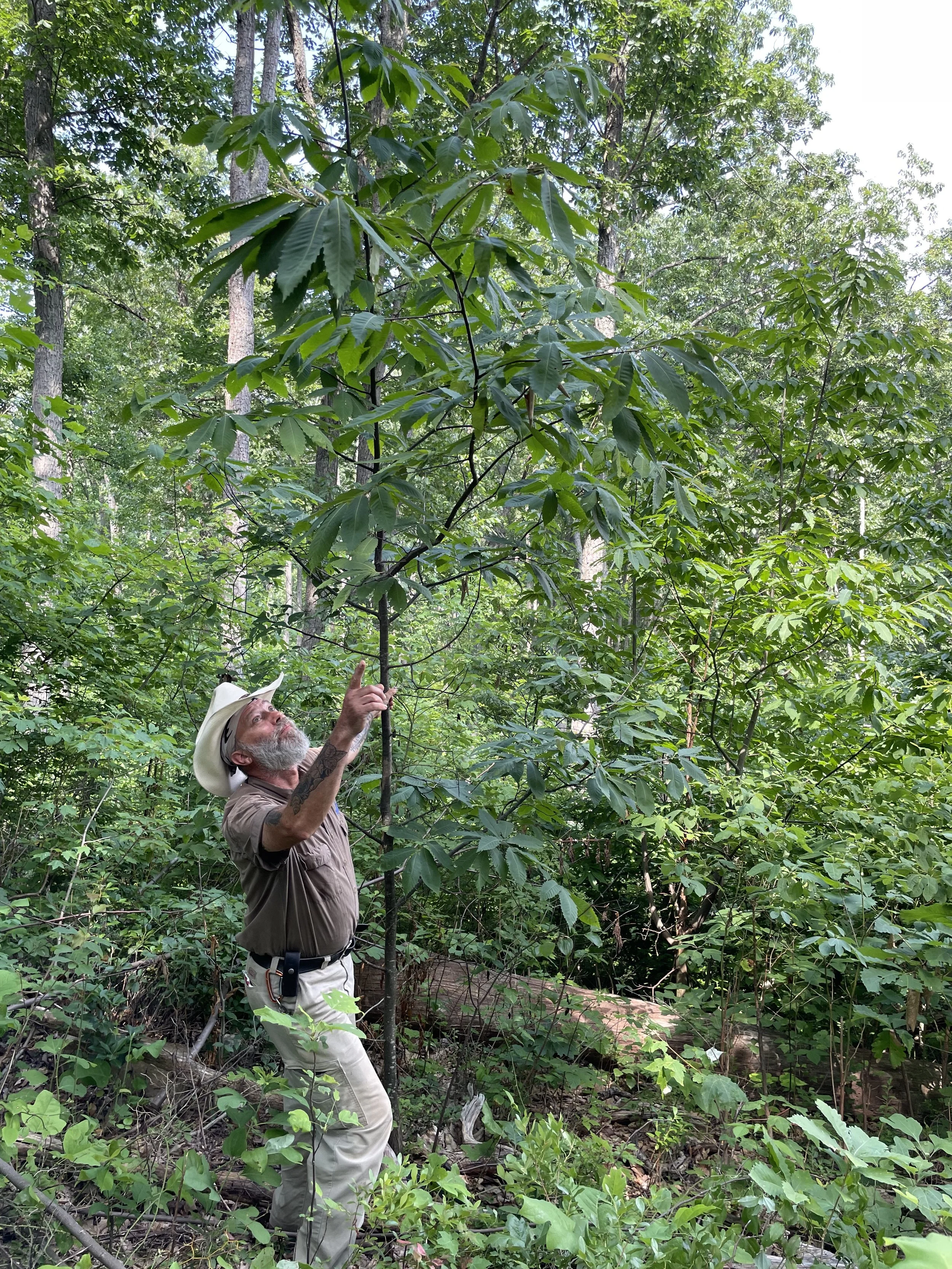
Clint played a central role in ensuring that Art and I experienced the full breadth of Berea’s work. From organizing guided tours of the nearby tulip poplar forests to arranging meetings both on and off campus, he created opportunities for meaningful exchange at every turn. Clint grounded much of the work being done at Berea in the early insights and forest philosophy of Silas Mason, a foundational figure in American Forestry and critical to the establishment of the Berea College Forest. With genuine admiration for Mason’s work, Clint showed us how his early approach to forestry still holds real value today. The tulip poplar and white oak forests left a lasting impression. Towering, straight, and vibrant, these forests spoke to what is possible when management practices align with ecological understanding. One of the most striking aspects of the trip was the work being done on American chestnut restoration. Once a dominant species in eastern forests, the chestnut’s near-eradication by blight remains one of the great ecological losses in North America. Clint led us to a site in in the woods and began discussing the history and decline of Chestnut. The scale of the loss is difficult to comprehend. Once one of the defining trees of the eastern hardwood forest, American chestnut was effectively erased from the canopy by an introduced fungus in little more than a generation; by the middle of the twentieth century, billions of trees had died, leaving behind only scattered survivors and the persistent sprouts of old root systems. Then he stopped, took a long look around, and said, “you’re standing in a grove of around 200 Chestnut trees”. Near the grove, a new sign that references the once-ubiquitous Chestnut of Mason’s day, states: “Gone but Not Forgotten…fewer and fewer people remember collecting chestnuts or seeing a mountainside covered in creamy white blooms…but the forest remembers.’ The efforts underway to restore this species underscored the long timelines involved in forestry and the importance of persistence and collaboration in addressing complex challenges.
Horse logging on Berea College’s 9,000 acres is an important part of managing the forest while protecting the health of its watershed. Because horses can move through the woods with less soil disturbance, compaction, and rutting than heavy machinery, they allow carefully selected trees to be harvested while minimizing impacts on streams, seeps, and the forest floor. This low-impact approach helps maintain the soil’s ability to absorb and filter rainfall, reducing erosion and sedimentation that can degrade water quality. At the same time, selective harvesting can encourage a diverse, healthy forest and maintain the vegetation that slows runoff and protects streamside areas.
Horse logging also has an important social dimension. The presence of horses in the forest makes forest management visible and tangible in a way that modern machinery often does not. People can see the care, skill, and human judgment involved in moving through the woods, and many visitors connect with the practice because it reflects Appalachian traditions of working with the land rather than simply extracting from it. That connection can build public understanding and support for active forest management, particularly when people see that harvesting trees and protecting the watershed can be complementary goals. Horse logging therefore serves not only as a low-impact forestry practice, but also as a way of bringing people into the story of the forest—connecting the College, its land, its traditions, and the broader community around a shared ethic.
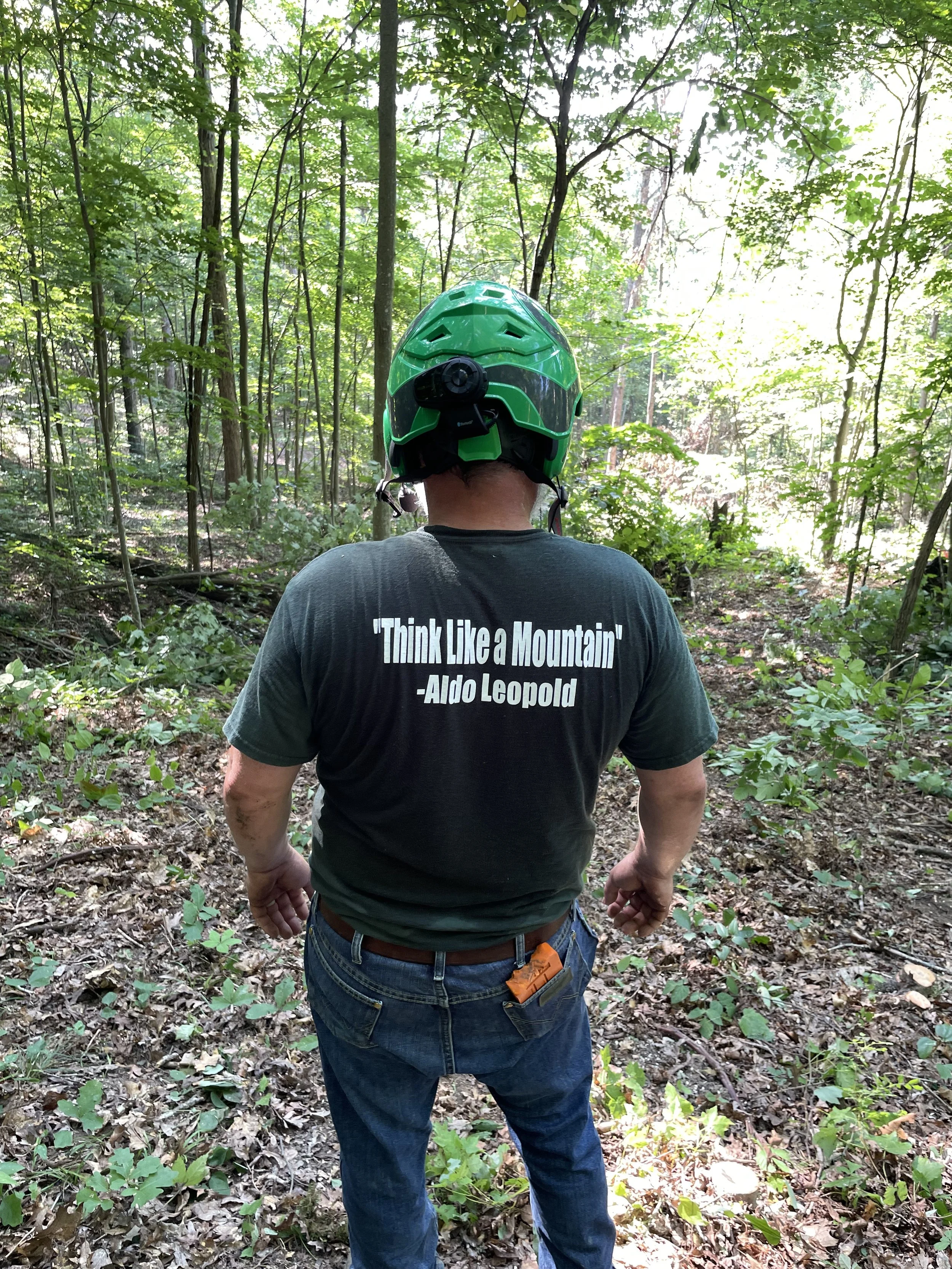
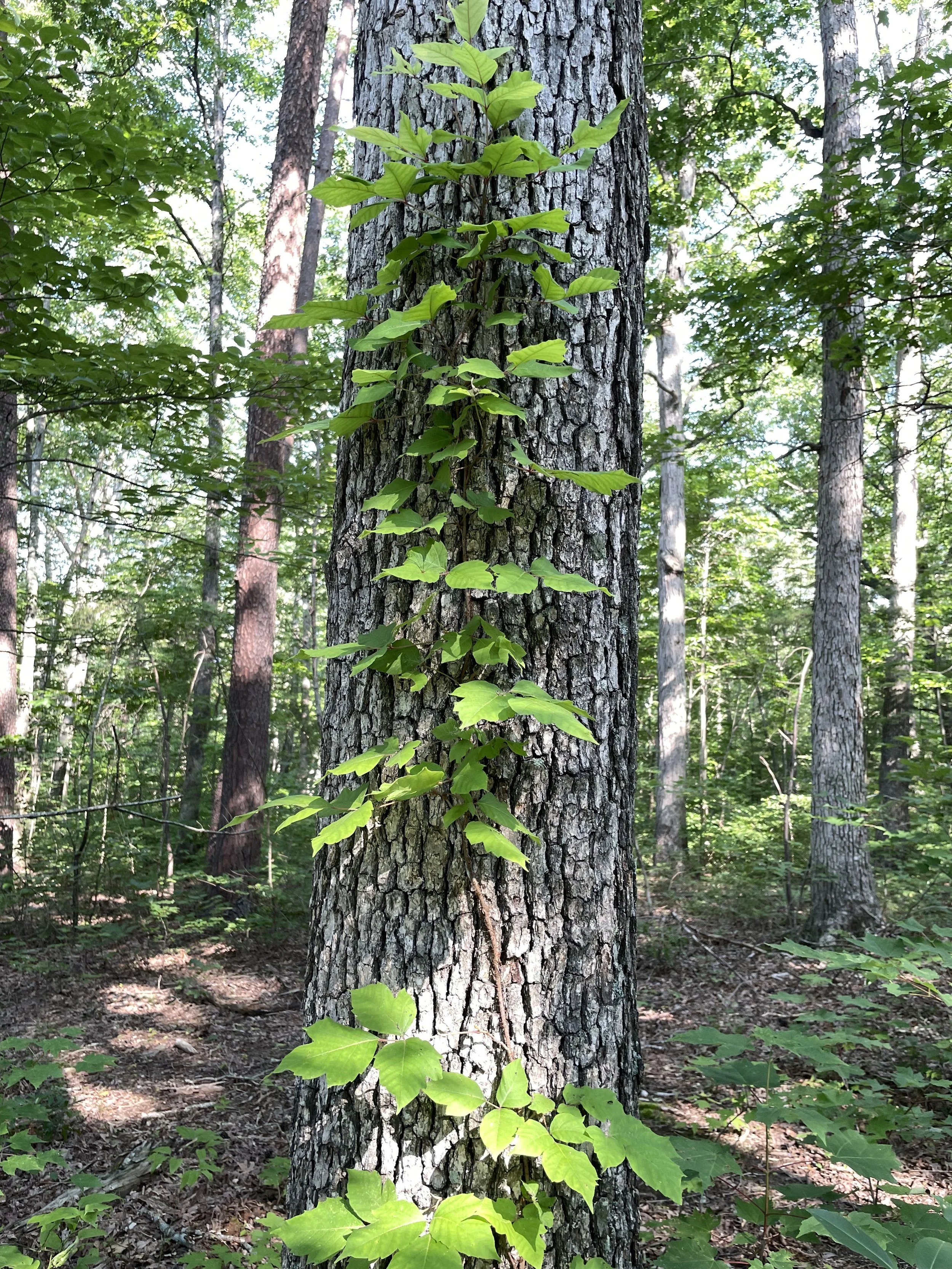
Art kept bringing us back to the same three-way equation: the landowner has to see a future in it, the logger has to earn a living from it, and the manufacturer’s market has to have enough margin to make the whole chain worthwhile. Berea was showing us that the pieces can fit together. Nova Scotia, we were beginning to realize, might simply require more work to make them fit. Perhaps most encouraging was the enthusiasm shown by the Berea team for the work being done in Canada. There was a shared sense that horse logging is at a turning point—not simply something to be preserved as heritage, but something to be reimagined and reintegrated into contemporary forestry systems. The exchange of ideas flowed easily, with both sides recognizing that while the contexts may differ, the underlying challenges and opportunities are remarkably similar. This sense of connection felt especially significant given the broader political climate. At a time of heightened tension between Canada and the US, the experience in Kentucky served as a powerful reminder that relationships at the ground level often tell a different story. Among woodlot owners, foresters, and loggers, there remains a strong sense of common purpose. The forest does not recognize borders, and neither, it seems, does the commitment to managing it responsibly.
At one point, Clint takes us out to meet Spencer, a local mule logger whose stable sits beneath the ‘knobs’—the steep, cone-shaped forest hills that rise behind his house. Spencer talks us through the system he has developed for getting logs off the hills, explaining the routes, the animals, the equipment and the small adjustments that make the whole thing work. There is nothing hurried about him. Soft-spoken and gracious, with the easy manner of someone entirely at home around horses, mules and timber, he carries himself with a quiet confidence. Something about the meeting shifted our perspective. Visiting with Spencer felt like we had stepped into a way of life. If we hadn't realized we had landed in Kentucky before, we certainly knew it now. There was also something convincing about listening to Spencer talk us through the landscape. His system wasn't designed on paper; he had learned by trying to figure out what the land would allow.
Compared with the Suffolk teams, the mules seemed particularly well suited to the Kentucky heat—steady, sure-footed and capable of working in conditions that quickly wore on the humans around them. Standing there beneath the knobs, it was easy to see why animal-powered logging could persist. It had not survived simply because people wanted to preserve an old practice. It survived because, for Spencer, it still made sense.
But Art had a question that kept surfacing, sometimes around the dinner table and sometimes long after the day’s lessons were supposed to be over: could a Nova Scotia horse logger actually make a decent living doing “worst-first forestry”? It was an uncomfortable question, but an honest one. Art, a veteran Ontario horse logger, knows better than most that good intentions don't pay the bills. He wants horse logging to work because he believes it is the right kind of forestry—low-impact, selective, and capable of bringing a different kind of attention back to the woodlot—but he is not easily persuaded that a good idea is a good business. In Berea, the equation looked almost unfairly favourable. The forests were magnificent, the hardwoods mature and valuable, and local markets gave a skilled logger something worth bringing out of the woods. Nova Scotia, by comparison, presents a much harder starting point: degraded stands, smaller and fragmented woodlots, uncertain markets, and landowners who, in many cases, have become so disconnected from their forests that they have stopped seeing management as an investment in the future. Yet that difference may also be where the opportunity lies. If “worst first” means taking on the difficult stands, improving forest condition one woodlot at a time, and giving landowners a reason to become engaged again, then the product isn't simply timber—it is restoration, stewardship, and a healthier forest that becomes more valuable over time. Daytime was for learning; the long Kentucky evenings were for taking it all apart again, comparing numbers, questioning assumptions, and occasionally cursing beneath the dark silhouettes of Berea’s hardwood hills.
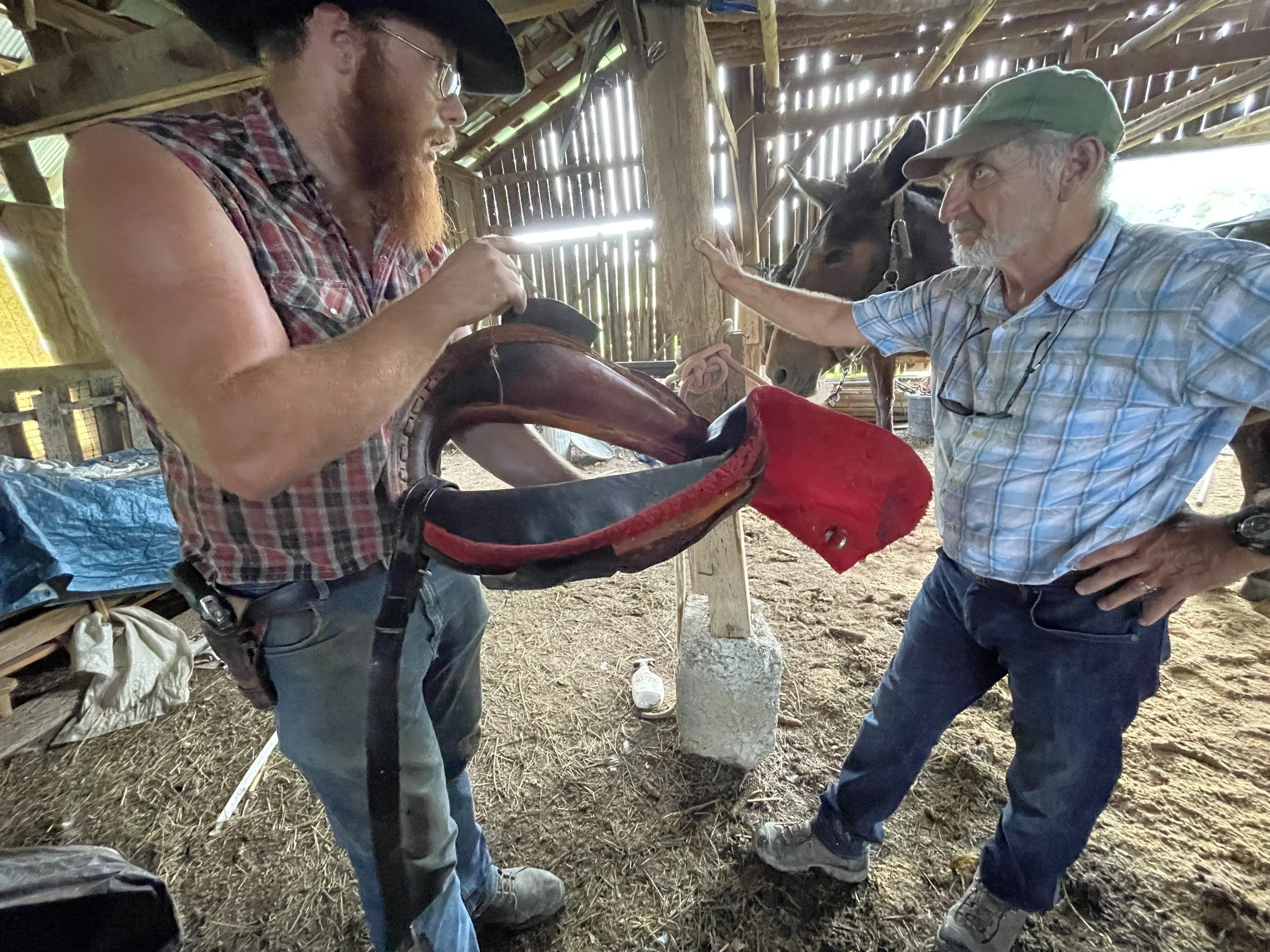
Spencer and Art. Topic: modern horse logging. Body language: entirely unrelated.
‘The landowner has to see a future in it, the logger has to earn a living from it, and the manufacturer’s market has to have enough margin to make the whole chain worthwhile.’
In the end, the trip was about more than seeing what is happening in Kentucky. It was about looking homeward. Nova Scotia’s forests are different in species, scale, and history, but the same questions follow us back: how do we work a forest without diminishing it, and how do we keep people connected to the land they depend on? With half of Nova Scotia’s forested landbase in small, private woodlots, those questions matter far beyond the woods we had just walked. By the time we were back on the road, the horses and the heat were behind us, but the conversation wasn’t. We carried the Kentucky woods with us—not as a model to copy, but as a reminder that good forestry is built from attention: to the land, to the people working it, and to what comes next. Sometimes the best thing a journey can do is send you home looking at your own forest differently.